.png)
We're building the market that should have existed all along.
Social outcomes have always had economic value. We finally have the tools to measure it, verify it, and trade it.
Who benefits? The growing number of people who are and will be left behind by our current systems.
.avif)
Our Origin
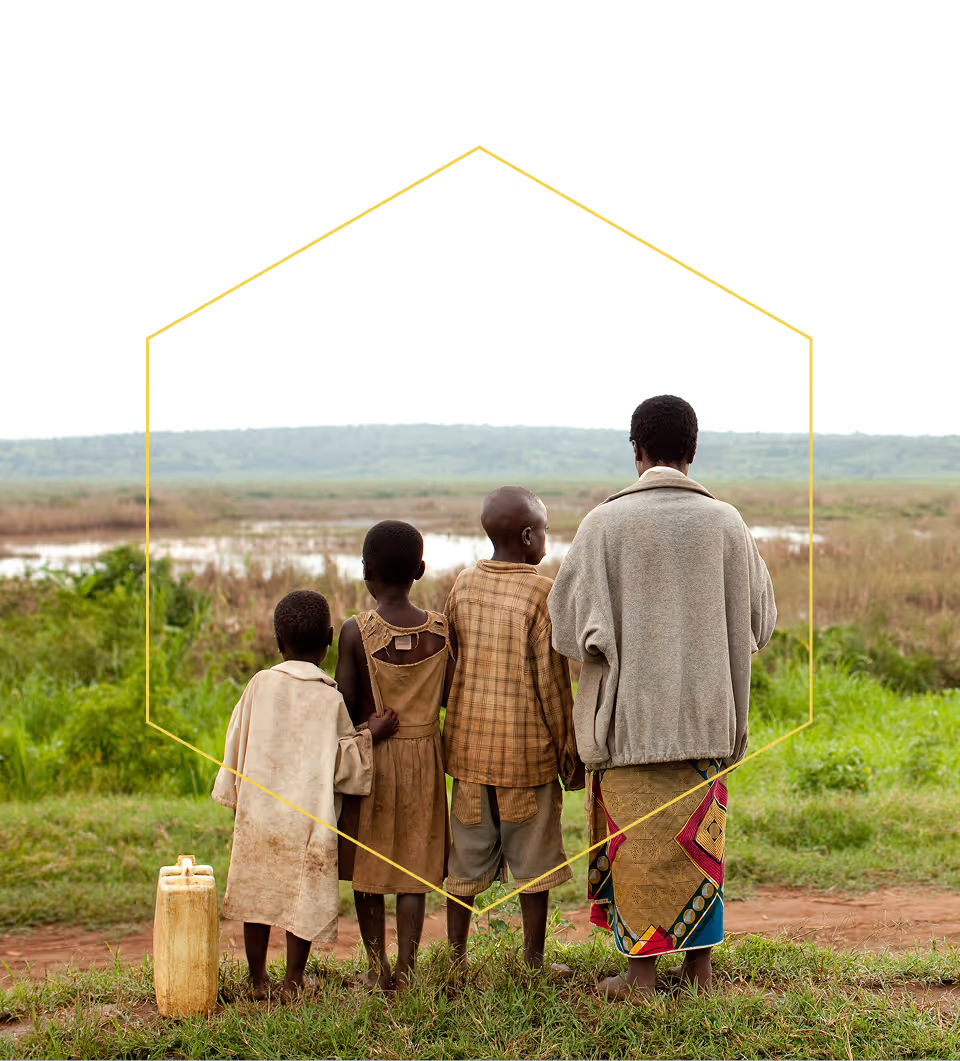
But the far greater social impacts those same projects created (31 million hours of women's time saved, 180,000 homes with improved air quality, 96 full-time jobs created) received zero economic value. The carbon had a market price. The social outcomes were invisible.
That disconnect is why CGM exists. The founders spent years in the carbon credit world through Bluesource, one of the earliest carbon offset companies in North America, and they recognized the parallel. In the late 1990s, carbon emissions were an externality with no price. Regulated markets changed that by creating standards, verification, and a mechanism for capital to flow toward measurable outcomes. Social outcomes are the same kind of externality today. We are redesigning markets to advance the common good.
A decade in the field. 180,000 households. 1.1 million lives.
Our team didn't start in an office. They started distributing clean cookstoves across East Africa, measuring impact from the ground up. That experience shapes everything we build.

We've seen this before.
Carbon markets grew from $10 billion in 2005 to $215 billion by 2019. What made that possible: standardized units (tons of CO2e), independent verification, a public registry, and a marketplace where buyers and sellers could transact. Today you can offset your flight with a few clicks. Twenty years ago, that was unimaginable.
CGM applies the same architecture to social outcomes. Standardized units (VIAs). Independent verification. A public marketplace. The core innovation is transforming measured, verified improvements in human well-being into assets, not offsets. Where carbon credits priced emission reductions, VIAs price positive social outcomes.
Our Vision
A world where market forces work for good. Where capital efficiently flows to organizations delivering verified results. Where access to funding is tied to performance, not connections. Where philanthropy moves from hopeful inputs to purchased, proven outcomes. Where the business case is clear: returns on capital (natural, social, human, and financial) are greater than the sum of their parts.



Our Core Team
What People Say

The efficiency and clarity of acquiring independently verified impact claims to specific social outcomes is a solution desperately needed by philanthropists, impact funds, CSR executives and anyone committed to the tangible, credible advancement of the SDGs.
What you've built isn't just innovation. It's system change. You're unlocking sustainable finance for the places and people the world has written off, where profit can't reach, but hope still lives.
More than a marketplace for social value, CGM represents a bold reimagining of the economic system, one where social value and economic value are measured, valued, and exchanged on equal terms.
The only way to know if we're achieving meaningful progress at scale in any industry is to measure outcomes in ways that are universally understood and accepted. CGM is bringing the discipline of data into the realm of human flourishing.